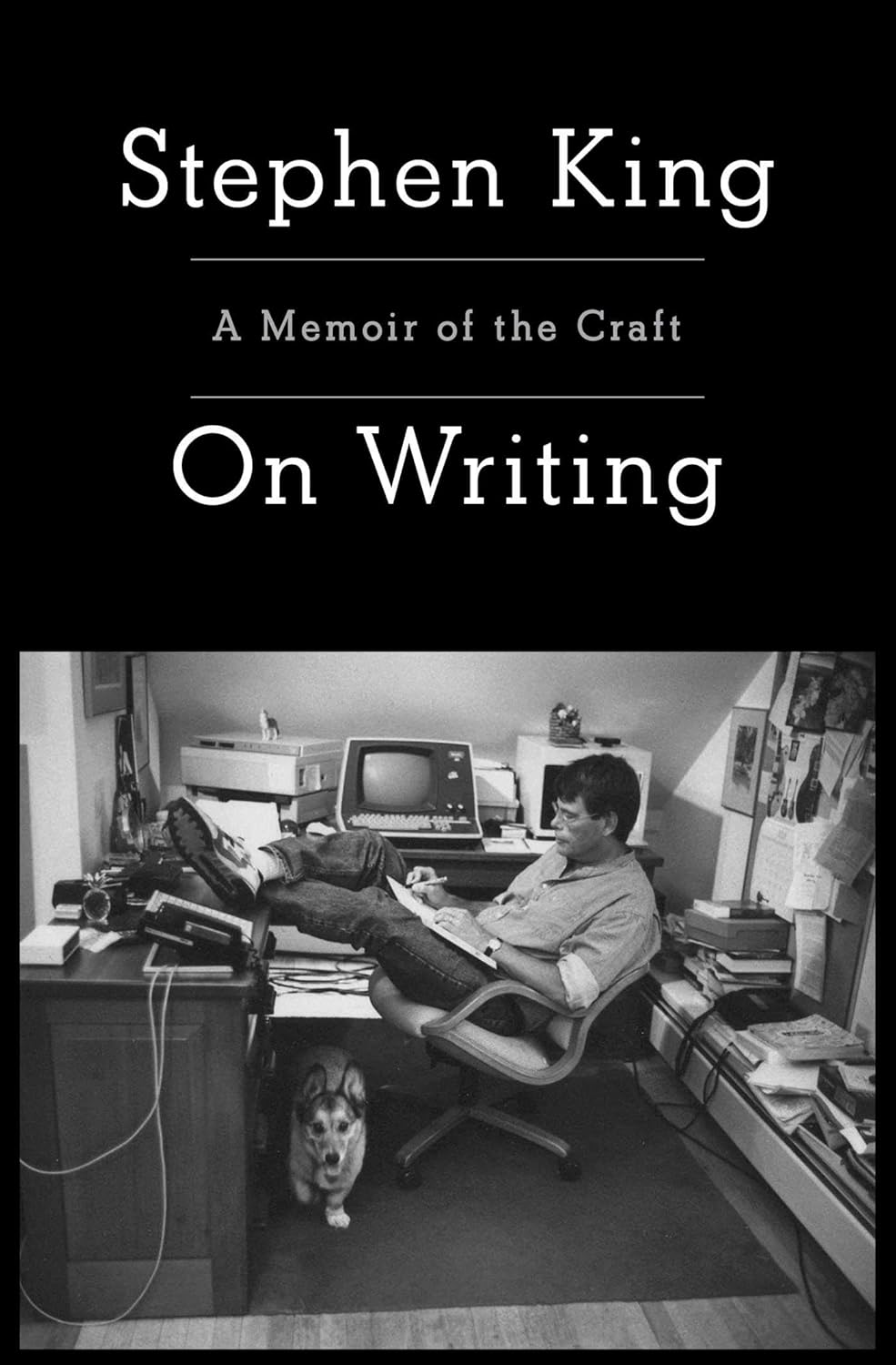
As annoying as it is to make myself sit down and do these writeups, I do find that it is a rewarding experience once I am done with the writeup. I wouldn’t want to do this for a living but if I have no commitment to a hard deadline/paycheck, then I can just have fun with it. I noted this in the short writeup I did for On Writing in my 2025 year in books writeup (Link here) but I wanted to talk about it a bit more here. There are people who love to write, like Stephen King, but I do not think I am one of those people. I can enjoy it when I can just do stream-of-consciousness writing like I am mostly doing now; but if I have to sit and organize my thoughts and plan out an essay, struggling to find evidence to support my ideas, then it turns into work.
Getting back to the fun part, the two main things which contribute to the fun are the insights I glean while doing the writing and the opportunity, and excuse, to dive headfirst into learning more about the thing I am writing about. I’m probably going to do this anyway; but, as mentioned, it is another excuse to do so. This can be a problem though, if I end up choosing to try and write about something I don’t actually like or I don’t actually find very interesting. It will lead to me having to work with the piece I do not enjoy and will probably make it even harder to get myself to write than it already is. Then again, you could make the argument that a fervent hatred and disgust could be used as a driving force to get the writing done. I did have a similar case when I finished The Gunslinger, although that wasn’t due to hatred or disgust. After finishing the book I was struck by Stephen King’s writing style with its unabashed and unflinching descriptions and “real” characters. You can read more in my writeup about the book here. There is also the issue of losing interest in the topic either due to exhaustion or taking too much time to finish the writeup. For this writeup and another writeup I am working on, I ran into this issue. I took so long to make myself sit down and finish it that I almost lost interest and scrapped it. It would be such a waste to throw it away.
I want to find ways to get myself to write more. Like I mentioned, I do see the benefits of writing but it is difficult to make myself get it done. One of the places where I do a lot of my writing, and reading, is at work. I often have some free time and it looks a lot better for me to be typing something up or even reading a book than to be on my phone. The issue with that is that I don’t always have time since, you know, I might need to actually do work. I could try and do what Stephen King suggested in On Writing and set aside some time each day to work on it, but I really don’t want to do that – it would end up becoming a job. Thinking about it now though, that might be the best solution even if I don’t want to do it.
Another way to try and increase the amount of writing I do, which I have had some success with on editing, is to use some time tracking app like Focus Friend. I have been doing time tracking for years for other projects, but I am only just now realizing that I have not been doing it for writing. I have been experimenting with using Focus Friend when editing and I feel that the little extra bit of dopamine from earning the socks in the app is a surprisingly strong motivator. It helps me stay focused by giving me some extrinsic reward outside of just seeing the timer go up; now there is some reward which has some tangible value. This is a nice motivator for me and, based on the short test of a couple weeks, the simple time tracking is either not enough of a reward anymore or, maybe it never was.
The original reason I started time tracking was to actually see how much time I was wasting sitting around at home while unemployed. It annoyed me that I had so much free time which I wasn’t using for anything productive. Even playing video games would have been more productive – this sounds like I am downplaying video games and making them sound like a waste of time, this is not what I mean. I had so much time which I could have been using to do the many things that I always say I wish I had time for. I feel like the time tracking did accomplish this goal. It helped me actually see how much time I was allocating to tasks and how much I was using lazing away the day. I feel like it accomplished its goal and it did help me to be more productive and was an effective motivator.
In college, my English professor’s field of study was in Educational Psychology which was reflected in some of the books he assigned to us. One of the ideas which was explored was the idea of Intrinsic vs Extrinsic motivation. This idea looks at the sources of one’s motivation and tries to classify them into two categories; Intrinsic, being generally from an internal source such as enjoyment of the activity, and Extrinsic, being from some external source such as an award or money. Both kinds can be useful as sources of motivation each having their strengths and weaknesses.
I have mentioned a couple sources of motivation which can be sorted into these categories, one Intrinsic, and two Extrinsic. The intrinsic motivation comes from my desire to get more out of my reading and to learn more about some of the ideas I want to explore. These are Intrinsic motivators due to them being something meaningful to me as a reward rather than something tangible. The two Extrinsic ones are the time tracking and the socks from Focus Friend. These are extrinsic since they are a tangible reward for the work rather than something internal. Although I am listing time tracking as an extrinsic motivation, I didn’t realize it at the time. It was originally meant as a tool to help guide me toward being more productive with my time. As time went on though, I think it has changed to being an extrinsic reward by being a “number go up” kind of reward.
In general, I have tried to use intrinsic motivators as my primary source of motivation; this can lead to some issues though. One issue which I have dealt with is delayed gratification. For my writing, I do get some pleasure from the actual process, but oftentimes it just feels like work. The real feeling of satisfaction comes from the completion of a post, both from the accomplishment of the feat as well as the feeling of being done with something difficult. This poses a problem with staying motivated until completion of the product. With many of my writeups, I find that I am motivated at the beginning and am eager to get writing, but this motivation wanes after a few days – especially if I don’t have time to work on it. One solution, which Stephen King suggests in On Writing and uses himself, is the solution I mentioned before; to have a dedicated block of writing time everyday where you focus solely on writing. I think that this is a good idea but I also do not want to be a professional writer. I still might try and do this but it is a bit difficult finding the time to dedicate to this with everything else I need/want to do.
Another way which I could offset the issues from solely relying on intrinsic motivation is by not relying solely on intrinsic motivators. I believe that intrinsic motivators are the best way to achieve the highest quality of work; however, the quality doesn’t mean anything if you never actually finish anything. Instead of just relying on intrinsic motivators I can use extrinsic motivations to help keep me on track by providing an additional reward on top of the intrinsic reward. The two tools which I mentioned before, time tracking and Focus Friend, have been very helpful in keeping me focused and motivated on my work. I have primarily used them for video editing but I plan on applying them to writing as well. Maybe there are other tasks where they can be useful as well. I should explore this more.
This leads to another question, which type of motivation is better? I believe that intrinsic motivators will lead to better results, but solely relying on them can have issues. This is also the case with extrinsic motivators for a couple reasons. The first reason is if the extrinsic motivator is removed, then there is no reason to do the task. If the only reason to do the task is because you are getting paid for it, then you are likely not going to continue doing it if the money disappears. This can lead to issues where you have a task that you really should do but because there is no “reward” for doing it, you end up not doing it.
Another issue which could arise is dependency on these extrinsic motivators. The reason this is an issue is in part because of the previous point, but also because it can lead to a lack of personal fulfillment. The work that you are doing is not driven by you “wanting” to do it, it is driven by some reward. This could be a potential path to burnout.
The last thing I want to mention is more related to staying focused and on task while working. One of the issues that I have faced is getting distracted while working and not really focusing on the task I should be working on. The common advice for improving focus is by removing these distractions. I recently switched to Linux but I had issues with DaVinci Resolve resulting in me still needing Windows for editing. I also still use it for streaming but I think that should work if I just sit down and get it set up. In either case, I am still using Windows for video editing. I believe that this is actually a blessing in disguise. By requiring me to restart into Windows, it allows me to isolate my work and recreation environments. When I am booted into Windows, I still have access to Youtube and other distractions, but I have closed these tabs and only have the things I need for video production and streaming set up now. It has helped me stay focused while editing and allowed me to get more work done for Youtube.
Separating one’s work and recreation environment is a common suggestion in productivity media. I think Stephen King also mentioned it in On Writing as part of his suggestions for getting writing done. Normally this suggestion is related to a physical location such as an office. In college, I used my local library to achieve this objective. It was a place away from home where I could focus on my work and studies. Unfortunately, this is a little difficult for me to apply to writing due to the fact that I do most of my writing at work. I still think that I should try and apply this idea to writing. I feel like this could be useful for doing the last push to finish a write-up.
Writing, to me, is a rewarding experience, but it can be difficult to find the motivation to do so. I do enjoy it when I can get myself to sit down and actually do the writing. I typically glean some new insight into whatever I am writing about and feel that this, on its own, makes it worthwhile to do. This is a powerful intrinsic motivator and I often am very motivated, but I find my motivation lacking as time goes on. I have found that using extrinsic motivators such as an app like Focus Friend to help with this issue by providing an additional source of motivation to keep me going. I can also use techniques to remove distractions which should improve my focus such as isolating my work environment. By using a combination of intrinsic and extrinsic motivators, as well as other focus techniques, I can achieve my goal of writing more.

 JohnB_Live
Leave a comment